by Andy | Feb 3, 2026 | 70's, 80's, Hall of Fame
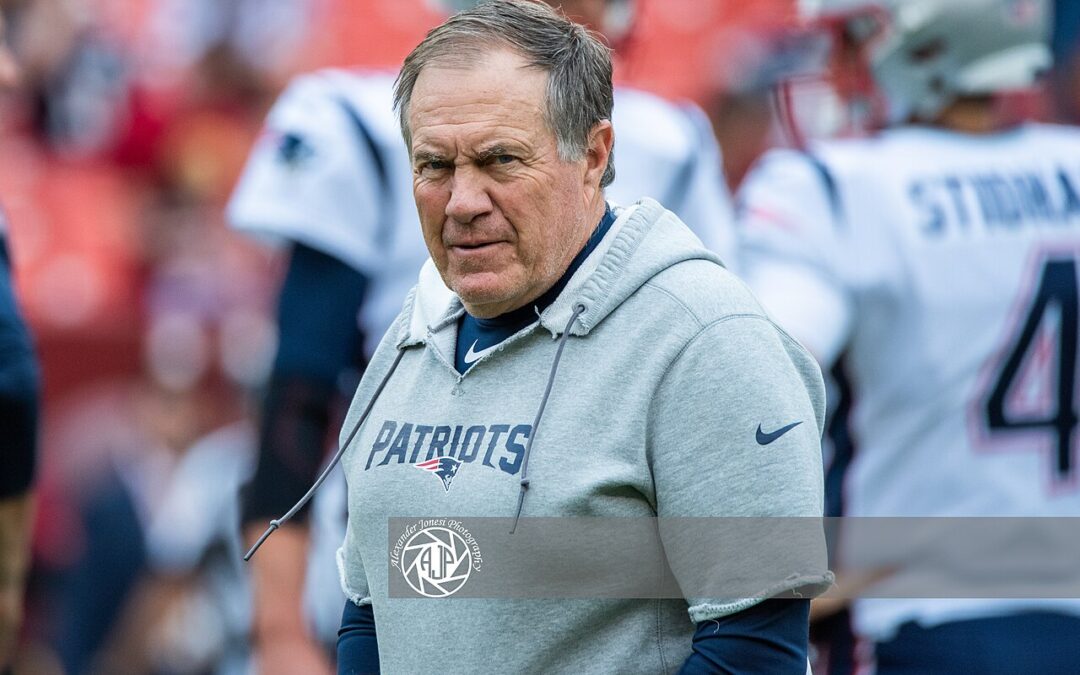
Word has come out over the last few days that former Patriots coach Bill Belichick and owner Robert Kraft will not make the Hall of Fame this year.
Kraft has been eligible as a contributor for a while. Belichick is in his first year of eligibility. Both were expected to sail through the process this year, riding together into the glory of Canton, Ohio as a result of their long, successful tenure together – even though they seem to not like each other very much right now.
A funny thing happened along the way – both of them got caught up
in the Hall of Fame’s baffling new voting process, which combines
contributors, coaches and senior committee candidates into one pile and forces voters to choose no more than three of the five between them rather than giving them an up or down vote.
Along with the news that the Patriots’ duo has been left out has come some ridiculous ran response. Some have even suggested that those voters found to have left, at least Belichick, off their ballots should have their voting rights terminated.
That’s a bit ridiculous.
First off, the voters aren’t the problem here. The problem is the system.
I believe Belichick should be in. To the degree that I care, I believe he should be a first-ballot nominee. But there are reasons – some due to Belichick himself and some due to circumstance — I see as legitimate why folks are going the other way.
A couple of voters have come out with reasoning in their ballots. One of those reasons is the new HOF voting system. Forcing them to choose just three of the five lumped together candidates muddies the issue. One can believe, as I do, that Belichick is the most qualified of those five. That’s fine. I think Belichick should be in. But he also will have other chances.
The glut of legit senior candidates beyond this year’s trio means for this group, this is likely their last and only shot at this point. If someone was to tell me, they wanted to vote for Ken Anderson, Roger Craig and/or L.C. Greenwood in order to see them have their day, requiring Belichick to wait another year, I can’t fault them for that.
Craig had only three 1,000-yard rushing seasons, four Pro Bowls and one Associated Press First Team award in his 11 seasons, but he was ahead of his time in that the first seven years of his career he gained more than 1,100 yards from scrimmage when adding in receiving. In 1985, he became the first player to record 1,000 yards both rushing and receiving. Solid resume.
Anderson was mired on some bad teams, a la Jim Plunkett, but he had an AP MVP, four Pro Bowls and a First Team AP award in 1981 when he led the typically moribund Bengals to the Super Bowl. They didn’t win and he’s on the borderline, but he’s a credible candidate.
Greenwood, who passed away in 2013, had six Pro Bowls and two AP first team awards and unofficially had 78 sacks as a member of the Steel Curtain defense that helped the Steelers to four Super Bowls. He may not have achieved the level of glory reached by Mean Joe Greene or Jack Lambert, but he’s a legit candidate, as well.
Coaches and contributors come up and come back all the time. The Hall of Fame’s new voting system does these seniors a disservice not allowing the voters a yes-or-no on their candidacy. These players are borderline for a reason, but they deserve their time and opportunity.
Regarding Belichick, there also was the issue of a couple albeit minor scandals he was involved in during his coaching career in New England. They won’t – and shouldn’t – keep him out of the Hall. But requiring a year wait as a penalty? Not the end of the world. Certainly not cause to revoke voting privileges.
Along with that, Belichick may be paying the price for the change allowing coaches on to the ballot after sitting out just one season. Many, including some of those sitting in the virtual offices at Zoneblitz.com, think he still wants to come back and coach in the NFL again.
So, again, voters are allowed to have opinions that differ from the general public, the fan. Fans love their teams, their coaches, their players, and they should.
Voting for the Hall is different. The idea that a difference of opinion – one shared, mind you, by at least 11 voters, if Belichick and Kraft are, in fact, being left out — should permanently cost them their vote is ludicrous.
To get into the Hall, they need 40 of 50 votes or, if none of them reach 40, to be the highest vote getter of the bunch. That means at least 11 voters said no to both Belichick and Kraft. You want to replace more than 20 percent of the voters?
I’ve also heard folks say it should be the current HOFers voting on today’s candidates. Again, I disagree. Media members may not be the perfect representatives, especially if there is any truth to rumors that folks like Bill Polian are using the vote as a way to penalize former rivals. Grudges, egos and bias are a legit drawback, but I suspect if the players who are in are voting, they’ll prioritize friends and former teammates – in some cases that might work out, but in others … I think you’d find over time an even bigger issue with guys who deserve to be in left out and those who didn’t deserve it getting in. Who is going to remain more upset about that perceived cheap shot in a game in 1983? The media member watching from the press box? Or the HOFer who took the shot on the field?
I’m not sure you can find a perfect voting system. But the changes levied to the system a couple years ago to tamp down on large classes and ensure only the best of the best get in has gone too far the other direction.
But yes, at the end of the day, this is a systemic issue. The new rules were well-intentioned, but they aren’t quite right yet. This system seems to be blocking even the most legit candidates from getting in and it’s going to continue becoming a bigger deal the longer they keep these rules as more legitimate candidates get backlogged.
Getting 80 percent of the vote might have been too possible when it was a straight up-or-down vote, but it appears it’s clearly too hard under this one. It’s likely going to result in a smaller class again this year and it’s going to gum up classes in the near future, as well.

by Tony | Apr 1, 2025 | 40's, By the Numbers, Hall of Fame
We’re finally back with another Best Numbers in NFL History post…and another one that probably seems like a no brainer at first thought–but some people may have different opinions…
Much like the best #51 in NFL History, a Bears legend is at the top of most lists when it comes to #40–but not when it comes to the ProFootballReference.com Approximate Value calculations…in fact, the player that is #1 even in the book that inspired this series is #7 on the ProFootballReference list–behind four guys I’m not sure I’d even heard of, and two others that were solid, but not sure I would have put them on the list if PFR hadn’t.
Gale Sayers – The obvious name on this list, and I would be a little surprised if the overall vote goes in any other direction. I suspect that his place in the Approximate Value chart is likely the same reasoning that some didn’t want him in the Hall of Fame–he played in only 68 games over 7 seasons before injuries ended his career. Still, with five All-Pro awards, four Pro Bowls, a Rookie of the Year award, and four finishes in the top five for MVP, it’s hard to think of anyone else for #40.
Bobby Boyd – One of the most formidable defensive backs of his era playing for the Baltimore Colts from 1960 to 1968, Boyd sits in the #1 spot on the Approximate Value chart for players who wore #40. Originally drafted as a halfback, Boyd found his calling on the defensive side, transitioning to cornerback. His knack for reading the game and exceptional ball skills led him to amass 57 career interceptions, which still is tied for 13th most all-time. He was a three time All-Pro, a two time Pro Bowler, was a one-time NFL Champion, and was a member of the 1960’s All-Decade team–but the Pro Football Hall of Fame in Canton never came calling.
James Hasty – Next up on the Approximate Value chart, James Hasty likely ranks just below Boyd more due to longevity than just skill & impact–he was a solid player, but not someone I would have considered a Hall of Fame (or greatest to wear a number) level talent. He did wear #40 for 13 seasons playing for the Jets & Chiefs, before finishing up with one game wearing #34 for the Raiders in 2001. He was a two time Pro Bowler, and a one time All-Pro second team, finishing with 45 career interceptions, 24 fumble recoveries and 5 career defensive touchdowns.
Mike Haynes – I vaguely remember Haynes as a player–thanks to collecting football cards–but missed the early part of his career, when he wore #40 for the New England Patriots. In those seven seasons in New England he was named Defensive Rookie of the Year, made six Pro Bowls and was 2nd team All-Pro six times (although the Pro Football Hall of Fame site gives him credit for a couple of All-Pro selections in this timeframe). He ended up with the Los Angeles Raiders in 1983, and switched to #22, but added three more Pro Bowls and two first-team All-Pro selections–and was elected to the Hall of Fame in 1997.
Dick Anderson – To be totally honest, Anderson is not a player I was familiar with–he donned #40 for the Miami Dolphins from 1968 to 1977, winning two Super Bowls and being named to three Pro Bowls, two first-team All-Pro teams (and one second-team), and was the Defensive Player of the Year in 1973–the year that they beat the Minnesota Vikings in the Super Bowl. Like Haynes, he also was named Defensive Rookie of the Year, and he also made the Hall of Fame All-1970’s Team.
Joe Morrison – Like Anderson, Morrison is a player I wasn’t familiar with. Unlike Anderson–and the others on the list that are ahead of Sayers on the Approximate Value chart–I’m struggling a bit to see where it is coming from. He played for 14 seasons for the New York Giants, listed in PFR as a HB-FL-RB. He only broke the 100 carry mark three times in his career, although he did amass 395 catches for almost 5,000 yards. With zero post season honors, though, I am guessing that the Approximate Value chart is the only listing you’d find him ahead of Sayers.
Ken Willard – Another running back from before I was born, Willard wore #40 for the San Francisco 49ers for the first nine years of his career, and did rack up four Pro Bowl appearances in the latter half of the 60’s. Still, aside form playing a few more years, hard to understand how his Approximate Value surpasses Sayers.
Mike Alstott – The one player from recent times I will include on the list, he currently sits two spots lower than Sayers on the Approximate Value list (with Bobby Joe Conrad between them), Alstott was a crowd favorite battering ram for the Tampa Bay Buccaneers, and made six Pro Bowls and was named to three first-team All-Pro teams, albeit during the decline of the Fullback position in the league. It may be largely due to recency bias, but I would suspect that a lot more recent fans would probably choose Alstott as the top #40 of all-time, unless they’ve studied enough of the history of the game to know of Sayers contributions.
Current Players wearing #40: Von Miller (Rams & Bills), Malik Harrison, Nik Needha – by all appearances, #40 isn’t a super popular number for modern players, with a lot of players only having gotten assigned it in the last year or two.
Loading ...
by Tony | Oct 13, 2023 | 50's, By the Numbers
So apparently we started this post over three years ago, not too long after we posted about the best #79 in NFL History–which was at least somewhat special (to at least one of us at ZB) as it was the number that Managing Editor Andy wore in high school. The number 51 was even more special (to me), as it is the number that I wore in high school–that it came up in the random draw we’ve done for numbers so quickly after #79 was pure luck.
So why did we never post it? Much like several of our other posts–in particular The Best #80 in NFL History and The Best #56 in NFL History–there didn’t seem to be much doubt who the best #51 in NFL history was–Dick Butkus. Surprisingly, when we circled back on this after Butkus passed away last week at the age of 80, we were kind of surprised to see that using ProFootballReference.com’s Approximate Value calculator, he wasn’t the “most valuable” #51 in NFL history–although I suspect that is due to career length, overall team quality, and perhaps flaw in their calculation.
Dick Butkus – When you think #51 in the NFL, Butkus is generally who you think about–at least if you’re not old enough to have seen him play (we’re not), you’ve seen him on TV and you’ve seen the highlights–he was voted the most feared tackler of all-time by the NFL Network…in 2009, more than 30 years after he retired. Picked third overall by the Chicago Bears out of Illinois, he was the hometown kid that made his hometown proud–he was a 2x NFL Defensive Player of the Year, 5x first team All-Pro (3x second team), 8x Pro Bowler, on the All-Decade teams of the 1960’s and 1970’s (despite only playing until 1973), the NFL 75th Anniversary Team, the NFL 100th Anniversary Team, was elected to the Hall of Fame in his first year of eligibility (1979)…the accolades go on and on. Would be an absolute shock if someone said he wasn’t the best #51 in NFL history.
Sam Mills – Based on the Approximate Value calculator from PFR, Sam Mills is the best #51 in NFL history. His story is truly inspiring–standing just 5 foot 9 inches tall, he was unable to make the Cleveland Browns (1981) or the Toronto Argonauts (1982) as an undrafted free agent after his Pop Warner coach helped him get a tryout. Browns coach Sam Rutigliano recommended to his friend Carl Peterson, then running the Philadelphia Stars of the USFL that he give Mills a look. Wearing #54, he became the anchor of their defense, helped them win two USFL Championships, and then followed his coach Jim Mora to the New Orleans Saints in 1986, where he donned the #51. He ended up being a 1x first team All-Pro, 2x second team All-Pro, 5x Pro Bowl player for the Saints and Panthers, had his number retired in Carolina, and was elected to both the Saints and Panther Hall of Fames, finishing his career with 1,265 tackles, 20.5 sacks, 11 interceptions, 22 forced fumbles, 23 fumble recoveries, and 4 defensive TDs. Sadly he passed away from cancer in 2005, but was elected to the Pro Football Hall of Fame in 2022.
Takeo Spikes – Coming in second in the Approximate Value list, Spikes played from 1998 to 2012 and is often named to the list of best players to play in the NFL and never appear in a postseason game…although often he isn’t even the best #51 on that list, because Butkus also never played in a playoff game. Drafted 13th overall in 1998, Spikes donned #51 for five different teams–the Bengals, the Bills, the Eagles, the 49ers and the Chargers. He played in 219 games, amassed 1,431 tackles, 29 sacks, 16 forced fumbles, 18 fumble recoveries and 19 interceptions. Great numbers, but not enough that I would put him in the conversation with Butkus.
Randy Cross – Can’t have a number in the 50-79 range without discussing at least one offensive lineman…and Cross is higher on the AV list than Jim Richter by a good margin. Cross was a mainstay on the 49ers 80’s dynasty, starting 180 games at guard and center from 1976-1988, earning 3x first team All-Pro, 1x second team All-Pro, 3x Pro Bowl and winning three Super Bowl championships during his career. As an offensive lineman…that’s about all he gets for accolades.
Other players wearing #51 worth mentioning include LB Ken Norton Jr., James Farrior, Jim Richter & Dominic Raiola. Most notable current players wearing #51 are Cesar Ruiz and David Long, although 3rd overall pick in the 2023 draft Will Anderson of the Houston Texans will likely move up that list quickly.
Loading ...
by Tony | May 25, 2020 | 50's, By the Numbers, Hall of Fame, NFL History
I swear, the numbers we choose for this really are random, I really do draw these out of a hat–although I was tempted to throw this one back, because even I had trouble believing that we got them back to back. I mean, we have covered the best #79, #80 and #81 already–but that was over the course of eight years that we wrote those three, and they weren’t consecutive. Plus, kind of like the question of who is the best #80 in NFL history, in the end it’s not really a debate who the best #56 in NFL history is, right?
We can all agree that the all-time greatest player to wear #56 was…Marty Schottenheimer, right? Seriously, he did wear it for his first three seasons playing for Buffalo, before switching to #57, and finishing his career with #54.
At the same time…it’s a pretty good list of players in NFL history that wore #56–maybe not quite as good as #55 will be, but there are five Hall of Famers that wore it as their primary jersey, a couple more Hall of Famers that wore it for part of their career, and a few pretty good players that aren’t in the Hall that wore it. There’s even a few that are wearing it today–including at least one that may make an updated version of this article someday, if he keeps playing like he has in his first couple of seasons…which his career will probably wrap up right around the time we finish this list.
(more…)
by Tony | Apr 25, 2020 | 50's, By the Numbers, Hall of Fame, NFL History
When I first drew #57 for our Best in NFL History series, per usual I thought of Vikings that I could remember with the number, and the only player that popped into my head was Dwayne Rudd. Or as he’s typically known here in Minnesota (and I believe in Cleveland) Dwayne “Effing” Rudd. No worries, he didn’t make the cut.
Bring in the 50’s, I figured we would have a bunch of linebackers to choose from, but none immediately jumped to mind–I looked up the ProFootballReference.com Jersey Number page first, and realized that Rickey Jackson (who I did see play) and Tom Jackson (who I just missed play) would probably duke it out, although there were a couple other names I recognized on the list.
It wasn’t until I flipped to #57 in my Best By Number book that I realized even looking at the PFR page, I missed the guy that will get my vote–the other player who wore #57 as his primary jersey number in the Hall of Fame.
(more…)
by Tony | Apr 20, 2020 | 70's, By the Numbers, Hall of Fame, NFL History
Almost eight years ago now we started this series, and apparently more than five years since our most recent, thanks to the COVID19 shut down that has us working at home, we’re going to try to get back into our By The Numbers series.
We’ve seen quite a few go down this path over the years—many just using a list of their opinions as way to drive pageviews–but our audience of Hall of Fame fanatics, combined with our non-traditional approach of bouncing around by picking numbers out of a hat leads to better content (in our opinion).
So, with the goal of getting us back to averaging more than one of our number posts per year, we finally get into the trenches with number 79.
(more…)

 Loading ...
Pretty certain even regardless of rules, Belichick will be in class of 2027
Paul I guess I wouldn’t have a problem with that I wouldn’t mind if Bill Belichick went in with Tom…
Robert I have a link to the petition in the first post
Thats what im thinking Paul wouldnt it save time if they just combined coaches and contributors into one category
for me the whole contributors list of contenders is on hold, until Kraft is elected..could be soon as 2027 or…